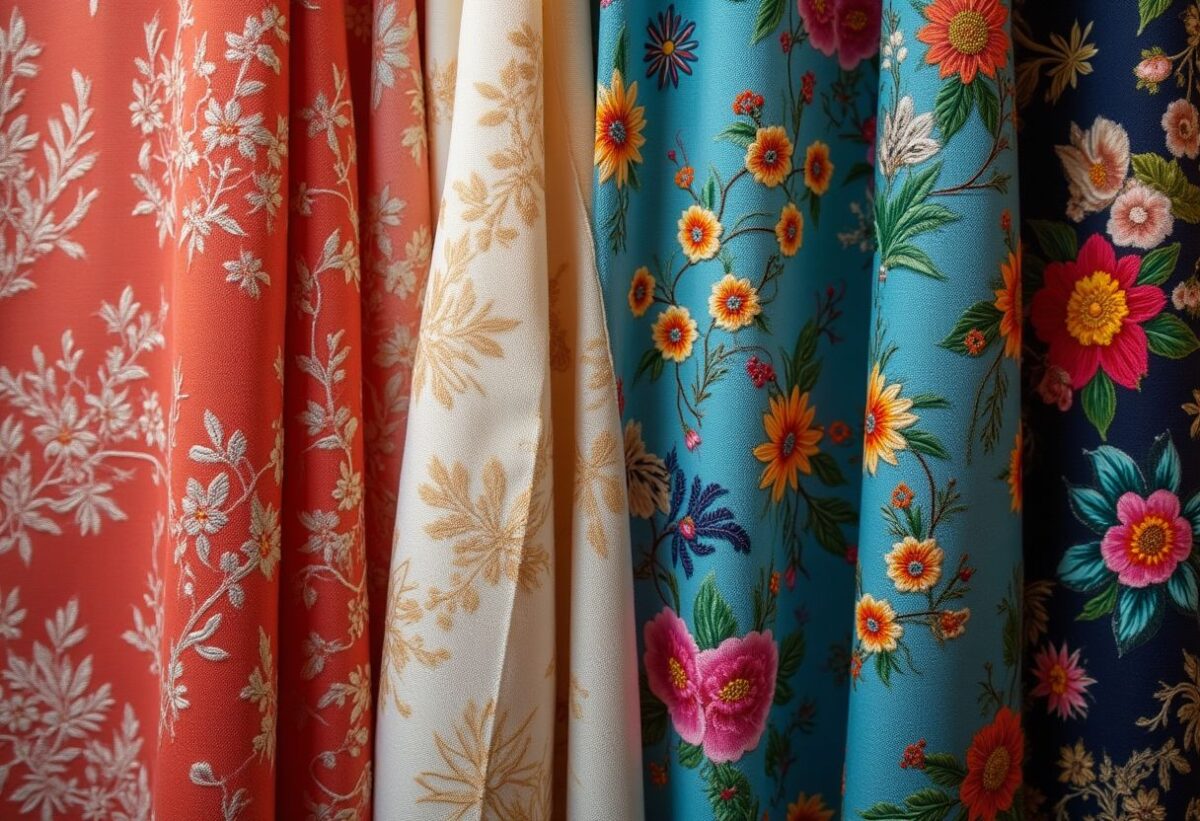
Fashion enthusiasts, budding creators, or textile professionals all agree on the importance of fabric choice to enhance creations. Whether for elegant embroidery or bold textile printing, the selected fabric often dictates the final result. The texture, density, and composition of the fabric influence not only the aesthetics but also the durability of the piece. A wise choice is therefore essential to ensure a flawless finish.
Preferred fabrics for embroidery
Embroidery, this ancestral art, requires suitable supports to reveal all its beauty. Certain fabrics lend themselves particularly well to this technique, offering both resistance and aesthetics.
Cotton, known for its versatility, is often the first choice for embroidery. Its softness and ability to maintain the shape of the stitches make it a preferred ally. Moreover, cotton provides a flat surface, ideal for precise and delicate patterns.
Linen, with its natural and slightly textured appearance, gives a unique character to the works. Stiffer than cotton, it ensures good thread support. Embroideries on linen are particularly sought after for their authentic look.
For a touch of luxury, silk is often favored. This refined fabric adds shine and brilliance to embroidery. However, handling it requires some expertise to avoid any risk of distortion.
Finally, Aïda fabric, specific to embroidery, offers regular holes that facilitate needle passage. It is prized by beginners and professionals for its ability to structure patterns.
Ideal fabrics for textile printing
Textile printing allows for the exploration of a myriad of patterns, colors, and textures. The choice of fabric plays a key role in the quality of the output.
- Polyester: this synthetic fabric is highly appreciated in textile printing for its ability to hold colors well. Durable and economical, it is commonly used for making t-shirts, bags, and accessories.
- Cotton: its popularity in printing is well established. It guarantees a sharp print with vibrant colors, in addition to offering comfort and breathability.
- Cotton-polyester blend: combining the advantages of both materials, this blend ensures durability and comfort while allowing for superior quality printing.
- Silk: for high-end prints, silk is the top choice. It gives a luxurious appearance and an unmatched shine to printed works.
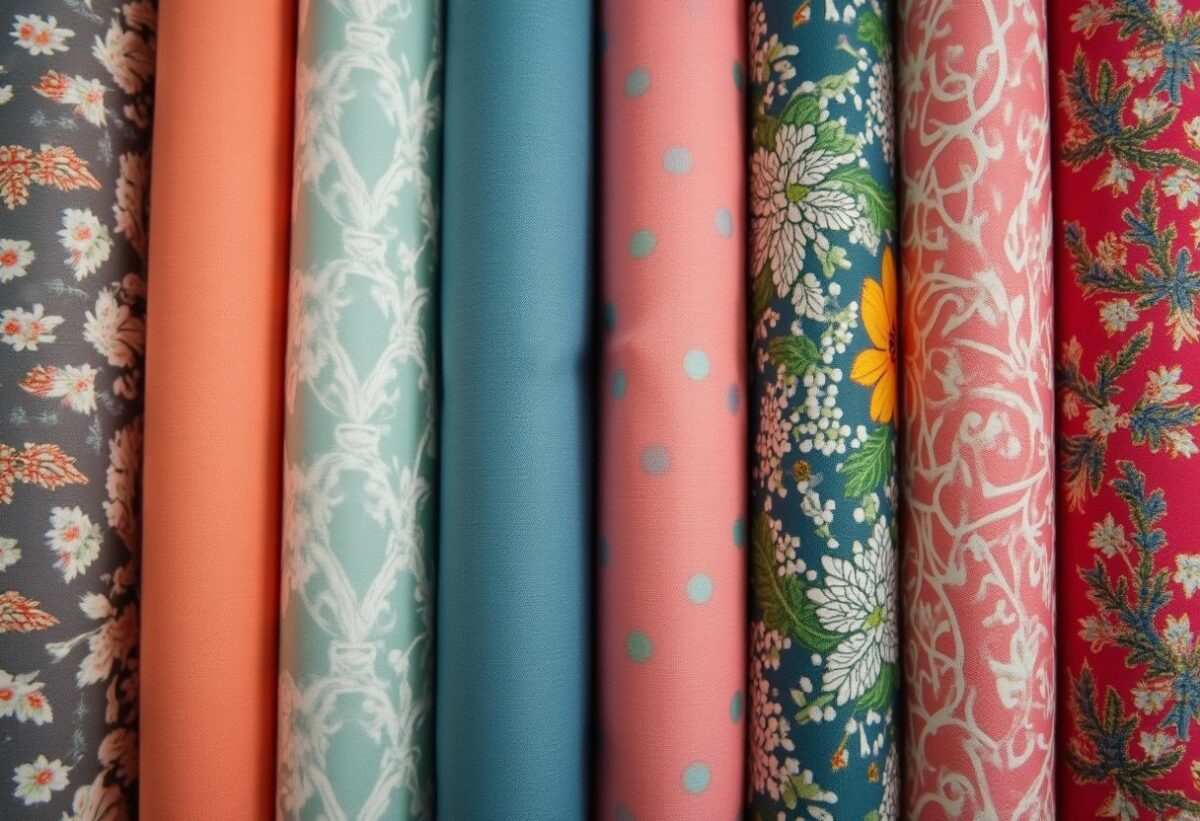
Factors to consider when choosing fabric
There are several elements to evaluate to choose the right fabric for embroidery or textile printing.
- Final use of the product: the destination of the printed or embroidered textile, whether for clothing, decoration, or accessories, will influence the choice of material to ensure that the result meets expectations.
- Comfort and maintenance: some fabrics require specific care, while others are easier to maintain. The comfort felt against the skin is also an essential criterion.
- Budget: costs vary significantly from one fabric to another. It is essential to assess quality against price to choose a material that respects budget constraints without compromising the quality of the result.
Printing and embroidery techniques
Each of these techniques requires careful preparation, and the choice of fabric complements the mastery of the techniques themselves.
Embroidery, although ancient, has evolved over time, incorporating modern processes to perfect patterns. Textile printing, on the other hand, uses various methods such as screen printing, digital transfer, and sublimation to transpose images onto fabric. Although these techniques are distinct, manufacturing relies on common criteria to ensure an exceptional result. Each technique demands particular attention to the choice of fabric so that the quality of the output aligns with the creative vision of the artist.
The choice of fabric for embroidery and textile printing requires special attention, given the vast diversity of available materials. Between tradition and modernity, each type of fabric offers specificities that influence the final output. Determining the right material according to use, technique, and budget allows for the enhancement of creations and fully expresses each creator’s vision.