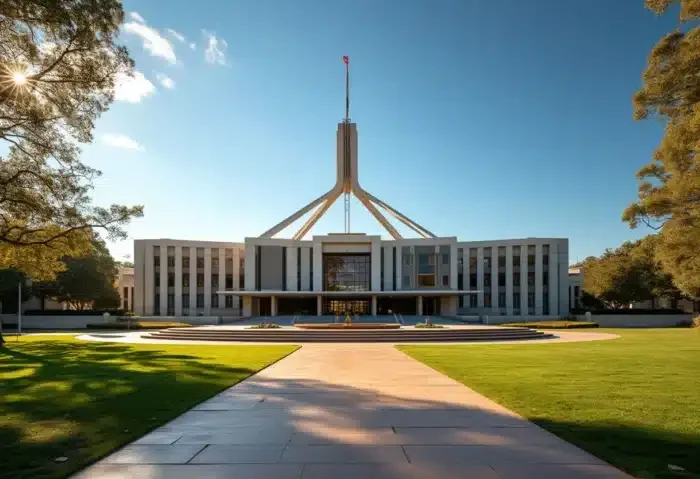
In the heart of Oceania, Australia reveals a fascinating aspect often overlooked: its political center. Canberra, the federal capital, is the seat of government decisions and national institutions. Between its wide avenues and iconic buildings, such as the Parliament and the Australian War Memorial, this city orchestrated by Walter Burley Griffin embodies the political soul of the country.
Beyond its administrative functions, Canberra offers a surprising blend of culture and nature. World-renowned museums, such as the National Gallery, sit alongside parks and nature reserves, providing visitors with a comprehensive insight into Australian identity.
The Australian political system: structure and functioning
The Commonwealth of Australia, a constitutional monarchy, is based on a complex organization. The head of state, King Charles III, is represented by the Governor-General of Australia, currently David Hurley. The latter plays a fundamental role in the functioning of the political system, exercising both executive and symbolic powers.
Key institutions
- The Australian Parliament: composed of two chambers, the House of Representatives and the Senate.
- The Prime Minister: head of government, currently Anthony Albanese, a member of the Labor Party.
- The States and territories: Australia is divided into six states and two main territories.
Legislative functioning
The Parliament, located in Canberra, the capital of Australia, adopts national laws. The House of Representatives, made up of 151 elected members, proposes and debates bills. The Senate, composed of 76 senators, examines and amends these proposals. This bicameral system ensures a balance and representation of the different states and territories.
International relations
Australia maintains strong ties with several regional and global partners. Among them, Japan, South Korea, and ASEAN play a crucial role in strategic alliances. Foreign policy, guided by the White Paper on Foreign Policy, revolves around regional security and economic agreements. The Minister for Foreign Affairs, Penny Wong, works to strengthen diplomatic and trade relations, particularly with the European Union and Indonesia.
This complex and structured system allows Australia to navigate a constantly evolving global political environment.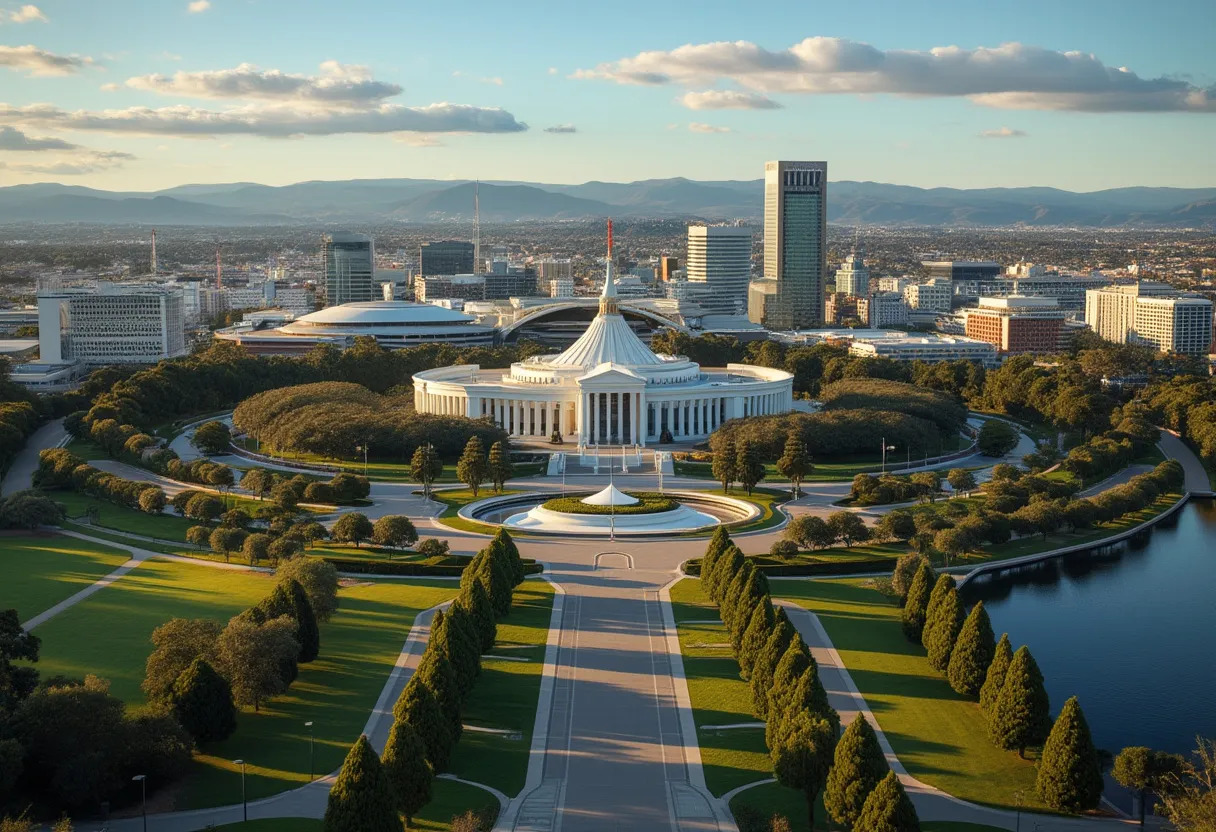
Current political issues in Australia
Australian politics finds itself at a strategic crossroads, marked by both internal and external challenges. Among the most pressing issues are relations with China, perceived as a growing threat in the Pacific. This situation demands increased vigilance, particularly in terms of defense and regional security.
International relations and security
Australia is strengthening its traditional alliances with Japan, South Korea, and ASEAN while consolidating its partnerships with Indonesia, Singapore, and India. These alliances are crucial for countering external influences and maintaining regional stability. Joint military exercises with Malabar illustrate this dynamic of enhanced cooperation.
Environment and sustainable development
Australia’s commitment to international agreements, such as the Paris Agreement, demonstrates a willingness to tackle environmental challenges. The country aims to host COP 31, which would strengthen its position on the global stage as a major player in the fight against climate change. The Ministry of Climate Change plays a central role in these initiatives.
Economy and trade
Economically, Australia is pursuing discussions for a free trade agreement with the European Union. This agreement could open new trade opportunities and strengthen bilateral economic ties. Economic projections published by the OECD are closely monitored, providing insights into future trends and challenges to anticipate.
These issues, at the crossroads of domestic politics and international relations, shape the Australian political landscape.