
An apartment on the third floor without an elevator, an upright piano stuck in a narrow hallway, delivery times imposed by the co-ownership: every move accumulates constraints that standardized formulas do not cover. Organizing an easy move requires choosing the right combination of services, not just ticking off a list of generic tasks.
All-in-one, modular, or remote: the real criterion for choice
Today, we distinguish three main approaches to moving, and the choice depends less on the budget than on the available time and the logistical complexity of the project.
The all-in-one formula covers packing, transport, unpacking, and sometimes cleaning the vacated home. It is suitable when time is short or when moving far away, but it requires entrusting all belongings to a single team. If a fragile item breaks, responsibility is clear, which simplifies claims.
The modular formula allows you to select only the useful services: you pack the boxes yourself, and the mover takes care of the transport and carrying of heavy furniture. This format has developed in recent years, particularly because the pressure on labor in the moving sector pushes professionals to offer shorter slots and targeted interventions, according to the French Federation of Movers.
Remote support relies on video visits and online estimates. You film your home, the provider assesses the volume, and the quote arrives without physical travel. This practice, now common among structured players, reduces back-and-forth on quotes and speeds up planning. Feedback varies on the accuracy of video estimates, but for a standard apartment, discrepancies remain limited.
Before comparing prices, you save time by consulting Vivez Décorez’s moving solutions to identify the format suitable for your situation.
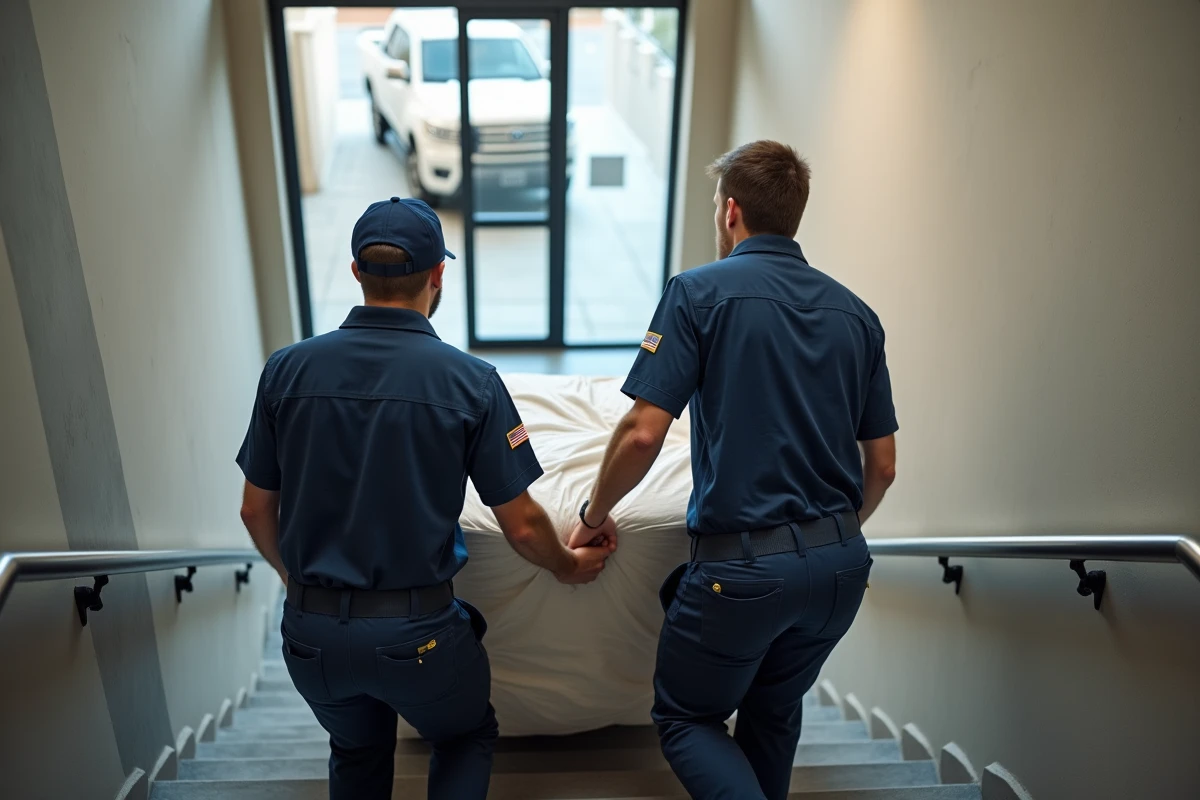
Urban moving: solving the last meter problem
In the city, long-distance transport is rarely the hard part. What complicates a move is the last meter between the truck and the apartment door.
A building without an elevator beyond the second floor radically changes the quote. Manual carrying through the stairwell takes time, tires the team, and increases the risk of damage. In this case, a lift becomes almost mandatory for bulky items: sofas, wardrobes, refrigerators.
Coordinating with the co-ownership and the town hall
Reserving a parking slot for the truck is a step that many discover too late. Depending on the municipality, you must submit a parking permit request several days in advance. Meanwhile, some property managers impose specific time slots for using the elevator in moving mode or for accessing common areas with a lift.
Checking these two points at least two weeks before the scheduled date avoids last-minute delays. You can also ask the provider if they handle this coordination, which is part of the “last meter” offers developed by companies specializing in urban moving.
Packing your belongings: where to focus the effort
The majority of guides recommend labeling boxes by room. This is a good reflex, but the real time gain lies elsewhere: in the prior sorting and in the protection of fragile items.
Selective sorting before packing
Every item you don’t move means less volume in the truck, one less box to pack, and time saved during unloading. Before touching the tape, go room by room to separate what you keep, what you sell, and what you give away.
- Clothes not worn for over a year go to donation or online sale, freeing up several boxes.
- Duplicate appliances (toaster, coffee maker) sell easily on classified ad platforms.
- Paper documents (bank statements, old bills) can often be digitized and then recycled, significantly reducing total weight.
Targeted protection of fragile items
Wrapping each glass in bubble wrap takes considerable time. A more effective approach: use household linen (towels, dishcloths, sheets) as cushioning material. Towels wrap dishes just as well as bubble wrap, and they would have occupied a box anyway.
For heavy and fragile items (mirrors, screens, marble trays), simple cardboard is not enough. You double the walls of the box with additional cardboard and secure the item so it doesn’t move inside. The NF EN 12522-1 and NF EN 12522-2 standards, updated in 2024, also regulate professional packaging and transport practices in the moving sector.

Planning the big day without margin for error
The stress of moving often peaks on the morning of the big day when you realize the truck arrives in an hour and the kitchen isn’t packed. To avoid this scenario, apply a simple rule: everything not used daily is packed at least five days in advance.
The last boxes, those from Monday to Friday, contain only the bare essentials: one pot, two plates, hygiene products, phone charger, a change of clothes. Prepare a separate bag with these items so you don’t have to rummage through boxes on the first night in the new home.
Loading sequence of the truck
Load the heaviest furniture first (washing machine, refrigerator, sofa), then the heavy boxes on the floor and the lighter boxes on top. Fragile items go in last, secured so they don’t slide during transport. This sequence seems obvious, but poorly organized loading causes the majority of breakages during transport.
A well-prepared move does not rely on one more checklist but on three decisions made early: the right service format, a radical sorting of belongings, and early coordination with all stakeholders (co-ownership, town hall, provider). The rest follows naturally.