Choosing car equipment is rarely just about the price tag. Vehicle compatibility, regulatory compliance and the impact on payload are technical factors that matter far more than design or brand when deciding whether a purchase is right for you. Here’s how to balance routine maintenance and customisation without compromising your car’s reliability or road approval.
Regulatory compliance for car customisation equipment
Any modification affecting details listed on the vehicle registration certificate (suspension, braking system, tyre dimensions) requires a separate procedure; it is not simply a matter of buying an accessory. France Titres (ANTS) may require a certificate of conformity or an individual vehicle approval report before updating the registration document.
Passing a roadworthiness test does not regularise a modification. The test assesses the vehicle’s condition against its own standards; it does not determine whether a modification is legal. Confusing the two could lead your insurer to refuse a claim in the event of an accident—a point we still see overlooked far too often.
Before ordering sports suspension parts, a body kit or wheels with non-standard dimensions, check the applicable procedure on the ANTS website. Having an unapproved part regularised after installation costs more than getting it approved beforehand. Online catalogues such as Roule Titine ! let you filter equipment by vehicle model, already helping to reduce the risk of fitting the wrong part.
Car detailing and bodywork care products: technical selection criteria
The car detailing market is packed with products. To tell an effective product from a marketing gimmick, you need to look beyond the label.
Washing and decontamination
A pH-neutral car shampoo preserves existing waxes and ceramic coatings. More aggressive alkaline formulas are used to prepare a surface before paint correction or applying protection, not for regular maintenance washes.
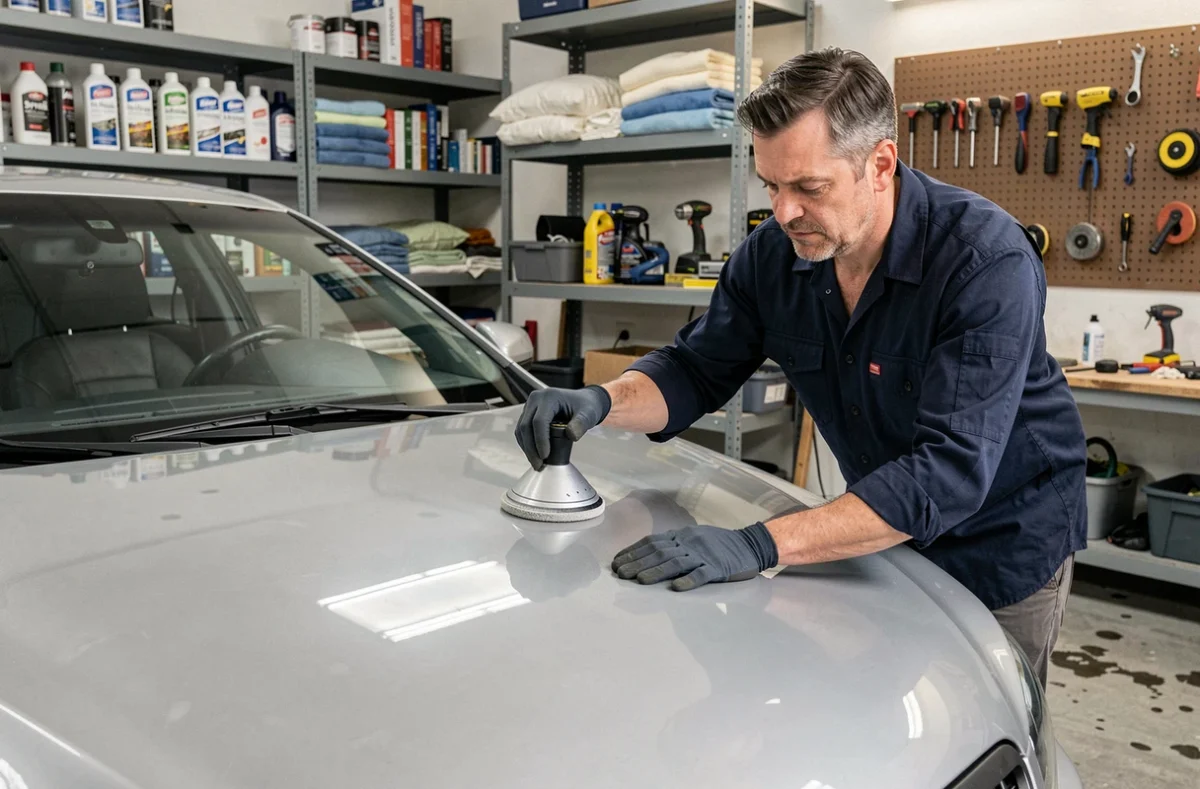
Iron decontamination should always be done before polishing. Applying polish to a bodywork surface still covered in industrial fallout is like rubbing abrasive particles against the clear coat. A clay bar or chemical fallout remover eliminates these contaminants without mechanical abrasion.
Bodywork protection
There are three main types of protection, each offering a different balance of durability and ease of application:
- Natural waxes (carnauba) give paint a warm, deep finish, but typically last only a few weeks, depending on the weather.
- Synthetic sealants last for several months and are more resistant to detergents. They require no particular expertise to apply.
- Ceramic coatings (SiO2 coatings) provide the longest-lasting protection, but require meticulous surface preparation (decontamination, correction and degreasing) to avoid sealing in imperfections.
Choosing between these options depends on how much time you’re willing to spend on routine maintenance and the condition of the clear coat to begin with.
Interior equipment: comfort, protection and vehicle resale value
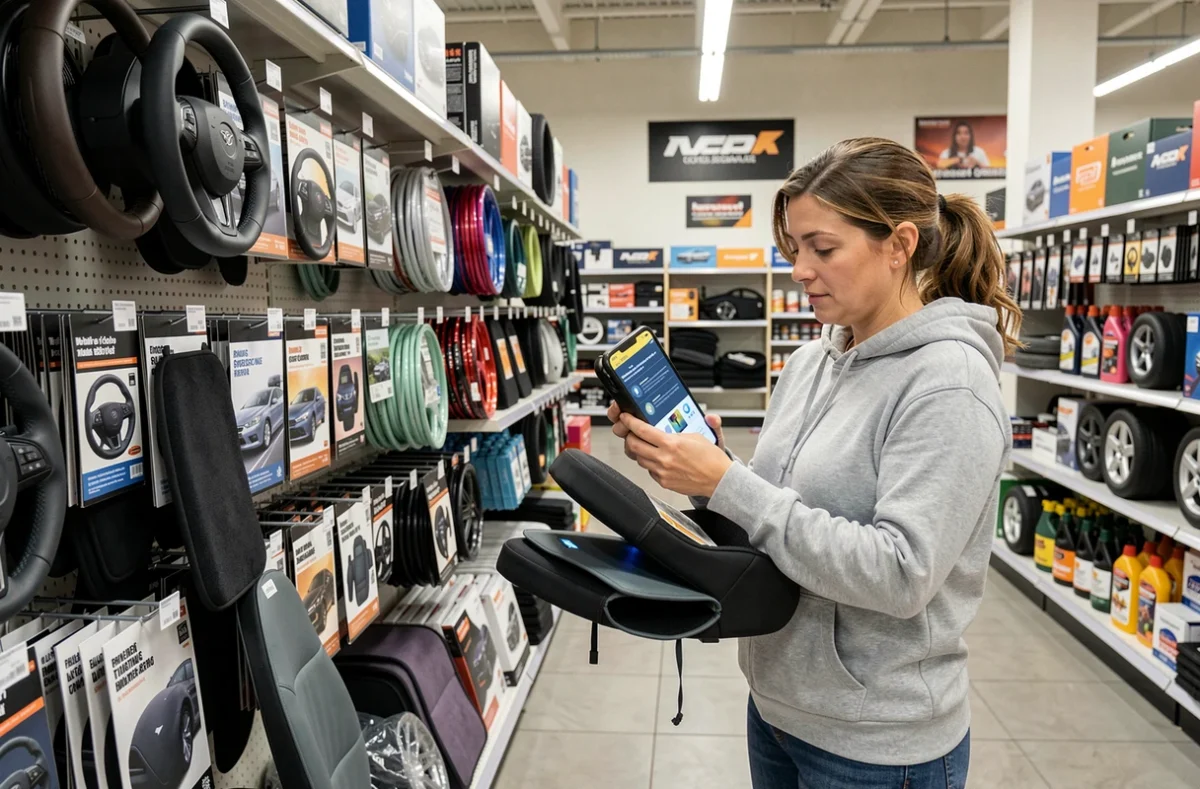
Customising the interior is about more than just looks. Custom-fit seat covers protect the original upholstery, helping preserve resale value—something used-car buyers routinely inspect.
For floor mats, choose models with clips or hooks that are compatible with your vehicle’s floor. A poorly secured mat can slide under the pedals, a safety issue that may be flagged during a roadworthiness test.
As for in-car electronics, phone mounts that attach with a suction cup or to an air vent do not modify the vehicle and require no paperwork. However, replacing the factory-fitted stereo with an aftermarket multimedia system may require a model-specific wiring harness adapter. Check CAN bus compatibility before buying to avoid conflicts with the vehicle’s electronics.
Wheels, tyres and the impact on payload
Every fixed item of equipment added to a vehicle reduces its remaining payload. This detail is rarely mentioned in general-interest guides, yet it determines whether your setup is legal. The vehicle’s actual weight must remain within the gross vehicle weight rating (GVWR) shown on the registration certificate.
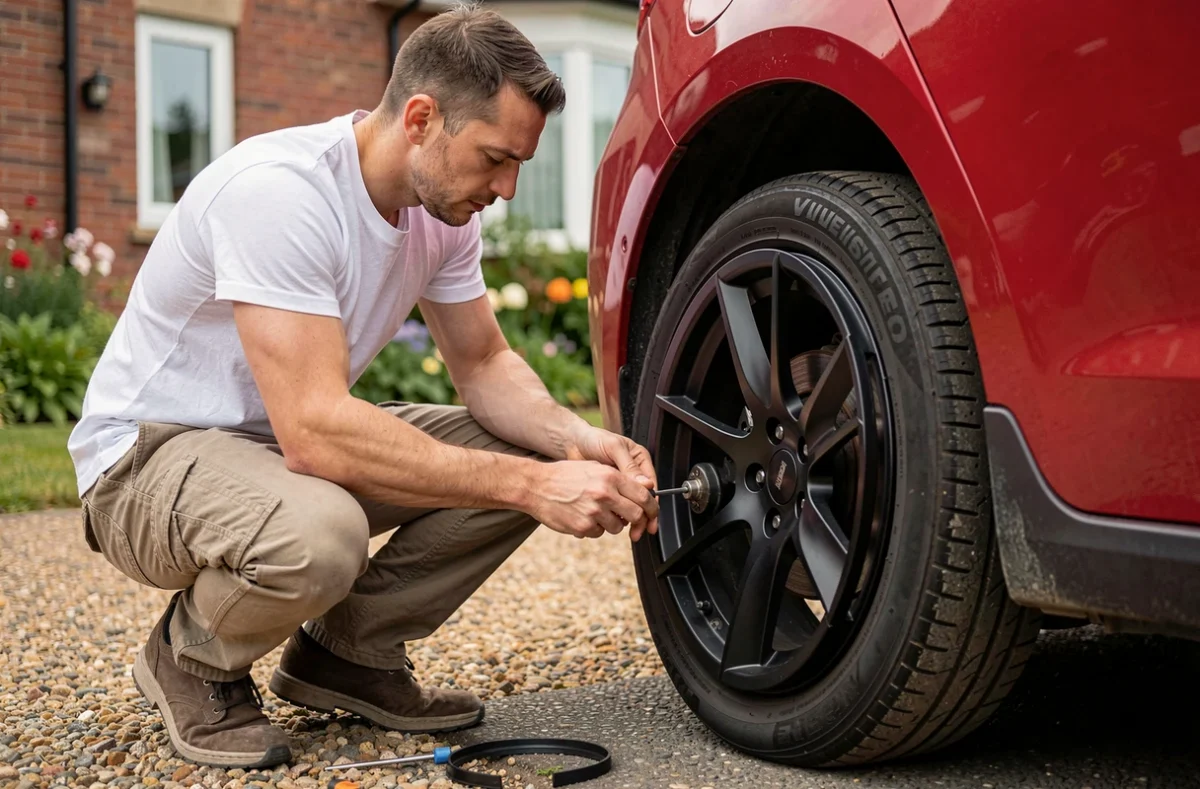
Alloy wheels with a larger diameter than the original ones may look appealing, but they alter the tyre-to-wheel ratio, ground clearance and sometimes the turning radius. Any change to tyre dimensions outside the manufacturer-approved equivalents must be checked for compliance.
When choosing tyres, consider three factors:
- The load index, which must be equal to or higher than the one specified by the manufacturer.
- The speed rating, which must not be lower than that of the original tyres (except for winter tyres in certain regulated cases).
- The dimensions (width, aspect ratio and diameter), which must be included in the approved equivalents for the vehicle.
Non-compliant fitment can result in a retest after a roadworthiness inspection and, more importantly, an insurance claim being refused in the event of an accident.
Routine maintenance equipment: invest in durability
Washing equipment and tools for light mechanical maintenance are areas where initial quality affects long-term costs. A pressure washer with adjustable pressure helps prevent damage to seals and exterior plastics. A hydraulic jack rated for your vehicle’s weight and certified axle stands are essential for any safe work beneath the chassis.
For storage, a modular workshop trolley costs more than a basic toolbox, but keeps equipment organised by frequency of use and cuts down on time spent searching for the right socket.
Balancing maintenance and customisation comes down to priorities: a well-maintained vehicle with compliant equipment retains its value and remains insurable. Aesthetic customisation comes next, once these essentials are taken care of. Starting the other way round is like dressing up a machine you don’t know how to maintain.