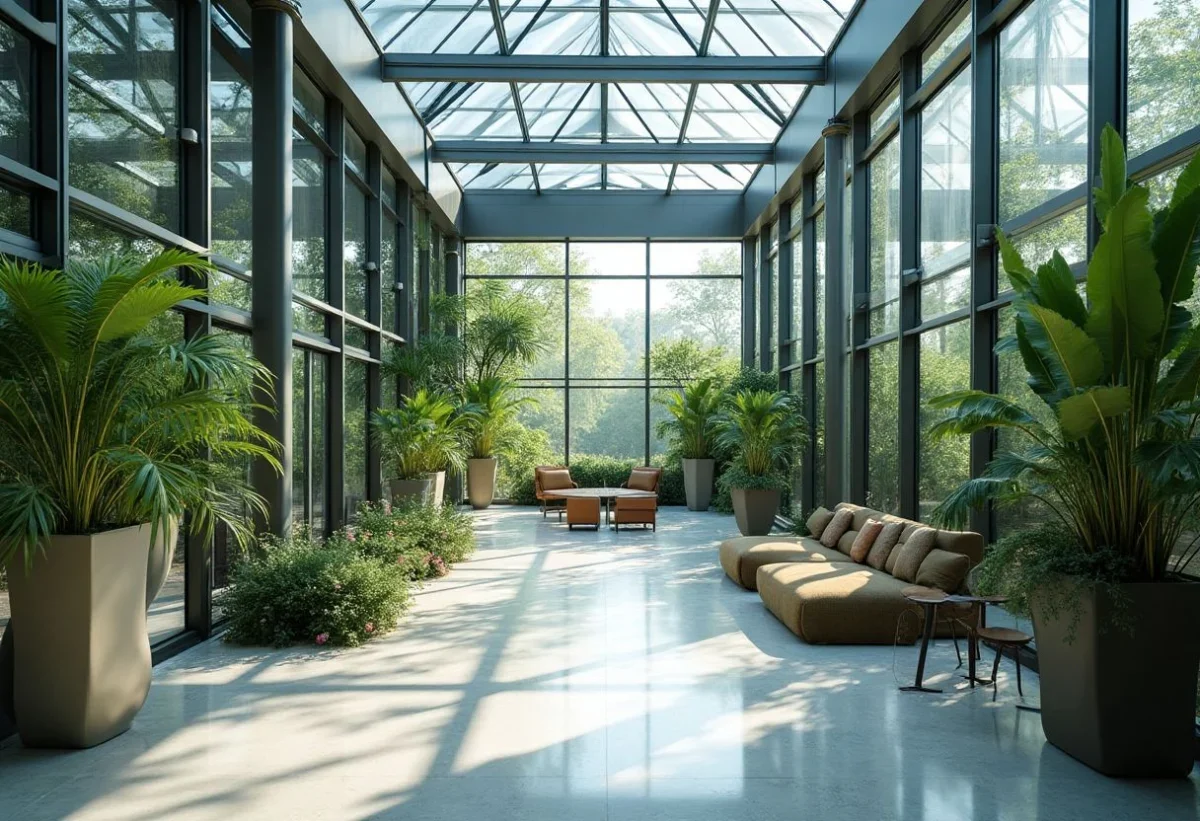
The glass roofs, these transparent and luminous structures, have established themselves as a central element of contemporary architecture. Their ability to transform a space by bringing in natural light and elegance is unparalleled. Beyond their aesthetic function, they play a crucial role in optimizing energy and the well-being of occupants. Originally used in artists’ studios for their capacity to capture daylight, glass roofs quickly conquered residential and professional spaces. They adapt to various styles, from the most modern to the most classic, offering versatility that appeals to many architects and interior designers.
The fascinating history of glass roofs
Since their appearance, glass roofs have traversed the ages, marking each era with their luminous imprint. Their history reflects the evolution of architecture and technological innovation.
In the 19th century, with the rise of the industrial revolution, the glass roof found its place in major metropolises, embellishing train stations, covered passages, and workshops. In these spaces, natural light became a valuable ally, reducing dependence on artificial lighting and creating an atmosphere conducive to creativity and cultural effervescence.
Over time, the glass roof has adapted to changes in styles and technological advancements. The 20th century saw the emergence of more durable materials, allowing for greater diversity in shapes and sizes. Today, glass roofs incorporate modern technologies, such as thermal insulation glass, which enhance their energy efficiency.
The different types of glass roofs and their uses
Each glass roof has its own personality and utility, depending on its design and location. Let’s discover the main categories that beautify and structure our spaces.
- Interior glass roof: Often used to separate spaces while maintaining an impression of openness. They are ideal for dividing a kitchen from a living room or creating a luminous partition in an office.
- Exterior glass roof: Perfect for winter gardens or greenhouses, it allows you to enjoy nature while being protected from the elements. It is also used for home extensions, creating a bright space that opens up to the outside.
- Roof glass: Allows a room to be flooded with natural light by capturing sunlight throughout the day. It is often adopted in lofts or large living spaces.
Each type of glass roof has its role to play and can be adapted according to the specific needs of the occupants and the existing architecture. The possibilities are endless, and each realization can be seen as a unique work of art that enriches the space it adorns.
The ecological and economic impact of glass roofs
The installation of a glass roof is not limited to aesthetic considerations. It also plays a significant role in ecological and economic terms. This aspect is often decisive in the decision to incorporate a glass roof into a construction or renovation.
- The contribution of natural light reduces the need for artificial lighting. As a result, energy savings are significant, especially during sunny days.
- Thanks to the passive heat they provide, glass roofs can help reduce heating needs during the coldest months.
- By improving thermal insulation through advanced materials, they contribute to reducing the carbon footprint of buildings.
By combining design and energy efficiency, the glass roof stands out as a wise choice for those who wish to marry aesthetics with environmental responsibility. A choice that proves to be an asset not only for the well-being of the occupants but also for the planet.
Choosing a glass roof: practical tips
Choosing to install a glass roof requires careful consideration. Here are some essential guidelines to help you make your choice.
First, it is important to clearly define the purpose of this installation. Do you want to separate two rooms? Bring more light to a dark space? Each project is unique, and the interior glass roof can meet a multitude of needs and aesthetic desires.
Next, the choice of materials is crucial. The glass must be selected carefully to ensure optimal insulation and enhanced safety. Finally, consulting a competent professional is essential to ensure that the installation complies with standards and achieves an impeccable aesthetic result.