The airline industry is undergoing an unprecedented revolution thanks to technological advancements. Recent innovations are radically changing the way we travel, offering safer, faster, and more comfortable experiences. From more fuel-efficient airplanes to ultra-connected in-flight entertainment systems, every step of the journey is being rethought to meet the growing expectations of passengers.
New technologies also enable more efficient management of airports and flights, reducing delays and improving safety. Airlines are heavily investing in artificial intelligence and the Internet of Things to optimize operations and personalize onboard services. The future of air travel looks more promising than ever.
New technologies are revolutionizing the cockpit and flight management
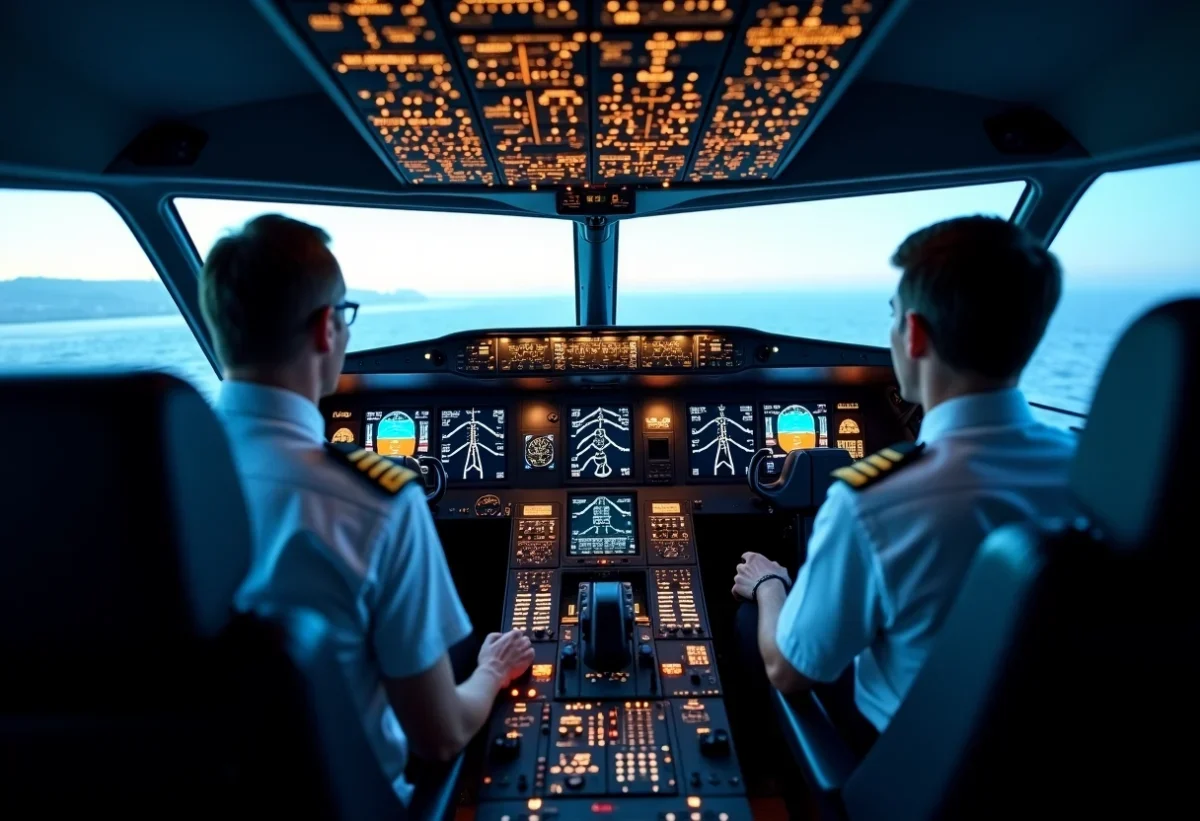
Innovation in the aviation sector is particularly evident in the cockpit, where modern technologies are redefining standards for navigation and flight management. The cockpits of airplanes, such as those of the A320 and A330 from Airbus, are evolving towards glass cockpits, integrating liquid crystal displays (LCD) and flight management systems (FMS). These advancements allow pilots to visualize critical parameters such as altitude, speed, and heading in real-time, thanks to PFD (Primary Flight Display) and ND (Navigation Display) screens.
Artificial intelligence and big data also play a fundamental role in optimizing aviation operations. Airbus’s Skywise platform is a prime example, facilitating data analysis to improve predictive maintenance and reduce operational costs. EFIS (Electronic Flight Instrument Systems) are now widely used, offering a more intuitive interface and better management of flight information.
Innovations are not limited to the cockpit. Flight management also benefits from advanced technological tools. Air traffic controllers are increasingly using electronic strips for better air traffic management, thereby reducing the risk of delays and enhancing safety. The integration of these technologies allows for smoother coordination among the various stakeholders in the aviation industry.
Safety is a major priority, and new technologies contribute to strengthening safety protocols. Autopilot, nicknamed ‘George’, has become a standard in modern aviation, regulated by the International Civil Aviation Organization (ICAO). These automated systems help reduce pilots’ workload and ensure more precise and secure navigation.
Air France, for example, is betting on these innovations to optimize its operations and provide an enhanced flying experience. The ipn Air France program integrates these advancements to ensure increased efficiency and optimal comfort for passengers.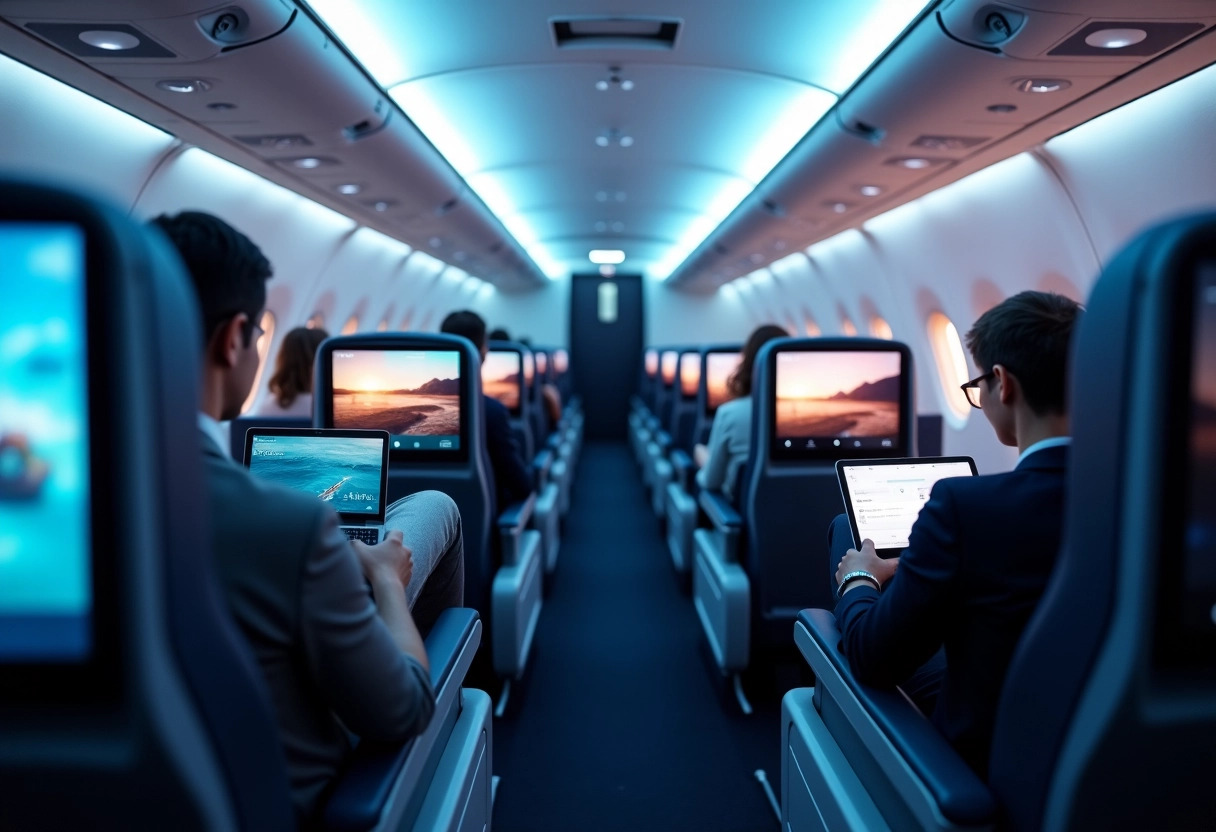
Innovations serving passengers and the travel experience
Modern technologies are radically transforming the passenger experience, from check-in to boarding, and throughout onboard comfort. The Covid-19 pandemic has accelerated this transformation, prompting airlines to adopt more automated and contactless solutions. Electronic boarding passes and automated check-in kiosks are now commonplace in airports worldwide.
Facial recognition systems, once reserved for science fiction movies, are now a reality in many international hubs. These technologies streamline the boarding process while enhancing security. Passengers can thus enjoy a faster and more secure experience, reducing queues and human interactions.
Onboard comfort: new dimensions
Airlines are heavily investing in new technologies to improve passenger comfort. Smart seats, equipped with sensors, can automatically adjust their position to optimize comfort. Wi-Fi onboard is becoming standard, allowing travelers to stay connected throughout their flight.
- Virtual reality: some airlines offer virtual reality headsets for immersive entertainment.
- Augmented reality: mobile applications allow real-time visualization of information about the flight and destination.
The use of big data and artificial intelligence also allows for a personalized travel experience. Airlines can anticipate passengers’ needs, offer tailored services, and enhance customer satisfaction. Consider these innovations as steps towards a smoother and more enjoyable journey.